

Audio version narrated by an AI voice.
Need To Know
Waze alerts are associated with a substantial reduction in speeding near reported enforcement locations, yet Queensland police are concerned about motorists using them to avoid detection. Mobile enforcement relies partly on uncertainty, while crowdsourced warnings make police locations more predictable. The challenge is encouraging drivers to obey speed limits throughout their journey, rather than only when they expect to be caught.
———
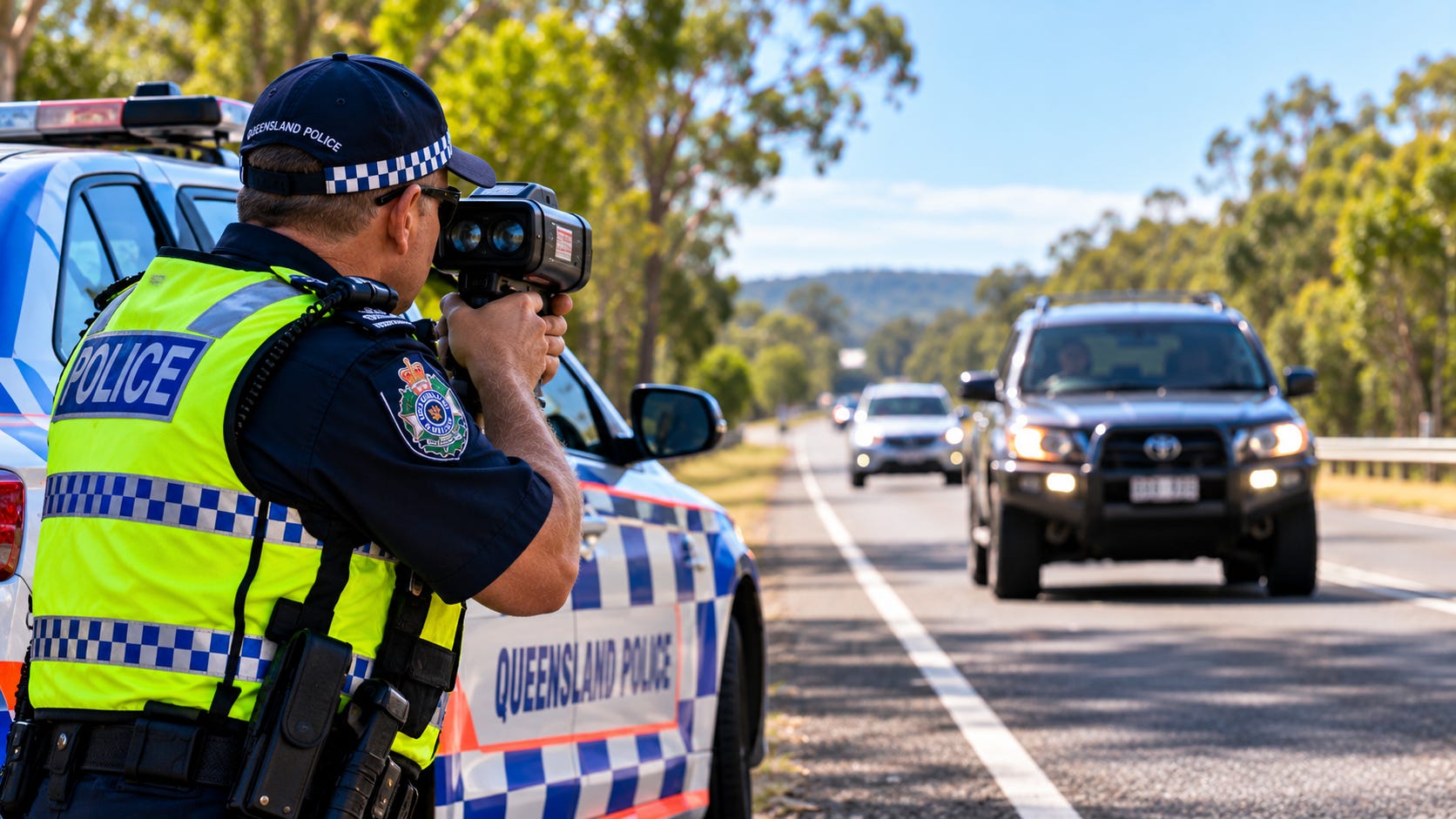
Waze can tell drivers where police are watching, but what happens to their speed when nobody appears to be looking?
⸻
Speed-camera warnings are supposed to make motorists slow down, which makes the latest argument over Waze in Queensland rather interesting.
Senior Sergeant Shane Panoho recently had some blunt advice for drivers using Waze, the navigation app, to avoid being caught speeding. He told them to stop driving like a “bloody muppet” and obey the road rules.
Anyone familiar with Waze knows how motorists can report police activity and speed cameras for others approaching the same location. A warning appears on the screen, giving drivers an opportunity to check their speed and ease off the accelerator.
Research from the University of the Sunshine Coast suggests those warnings are associated with a remarkable change in driving behaviour, although the findings deserve a closer look.
Researchers recorded 9,052 vehicle observations across 33 Queensland locations, comparing speeds before and after enforcement alerts appeared. The proportion speeding fell from around 55 per cent to fewer than 26 per cent, while average speeds dropped approximately five kilometres per hour. However, the researchers couldn’t establish whether individual drivers had received the warnings or what happened after they passed the enforcement location.
Surely fewer motorists speeding is a worthwhile result, but Queensland’s findings also reveal why police might be concerned about drivers knowing where enforcement is taking place.
Fixed speed cameras are often signposted because authorities want motorists to slow down at particular locations, especially where speeding presents a known risk. Mobile operations serve another purpose by making enforcement less predictable, encouraging drivers to consider the possibility of being caught even when no camera is visible.
Crowdsourced warnings potentially change that calculation by identifying where police are operating, giving drivers information they wouldn’t otherwise have. Someone who slows down for a reported camera might accelerate afterwards, although the Queensland research didn’t establish whether that happened. Equally, the study didn’t determine whether Waze reduces crashes or improves safety across an entire journey, which matters considerably more than the number of motorists receiving fines.
My writing stays free. If you’d like to help keep it going, you can chip in here.
Perhaps the lesson from Queensland is that getting drivers to slow down when they expect enforcement is relatively straightforward, while persuading them to respect speed limits when they believe nobody is watching remains the harder road-safety challenge.
Do Waze alerts make you more conscious of your speed throughout a journey, or only when approaching a reported camera?
Here is the problem with Waze and this is from personal experience operating hand held devices, the location can be changed very quickly. Usually the operators have a number of locations in mind depending on the time of day, traffic flow etc and they will work those locations, if the operator feels that vehicles are slowing down more than normal, then they just change locations, go somewhere else so from personal experience I don't think Waze or any other warning device will help, when speed radar was the thing, you could buy a detector for a few dollars, police then got detector detectors each one cancelled the other out.
To a lot of the young speedsters, it was a game particularly in places like Townsville with a high number of young Army personal, back in the day, the Army Personal didn't need to change their state vehicle registration and in those days its wasn't easy to do interstate vehicle rego checks and the game proceeded.
From my experience there will always be idiots on the road, I don't care how much you try, they will always be there, whether it is because of the thrill of it all, I don't know but they are out there, we used to call them accidents that simply haven't found there place to happen, the sad news these idiots sometimes take innocents with them. I attended too many of them and had to knock on too many doors telling mom and dad that son or daughter won't be home.
Bottom line, follow the rules, don't take shortcuts, kama is a bitch and it will bite you and make sure your vehicle is roadworthy, I lost count of the number of Traffic Incidents I went too where a vehicle fault was a major contributing cause. I am somewhat amused that it is called an ACCIDENT not an incident, an ACCIDENT is an event happening independent of the will of a person, rarely is a Traffic "Accident" caused by that, somebody was usually in the wrong place at the wrong time, not paying attention, drunk, being stupid etc occasionally it may be an accident but in my experience rarely.
I'm not sure the blunt advice offered by police is critical of the use of Waze, but rather more directed to general driver behaviour in QLD. Indeed, many driver's do behave like muppets. In anycase, if the objective is to moderate driver speed compliance, there is nothing to stop police, or anyone else, spoofing Waze with false location reports of speed cameras.