
Audio version narrated by an AI voice.
Need To Know
Snowy Hydro now expects construction to cost $22.2 billion, with the bill potentially exceeding $25 billion. Successive cost increases, unfinished designs and a troubled construction contract have raised questions about how the project has been managed. Australia’s Auditor-General found that Snowy Hydro had taken on greater financial risk without having reliable systems to control it, despite years of warnings.
———
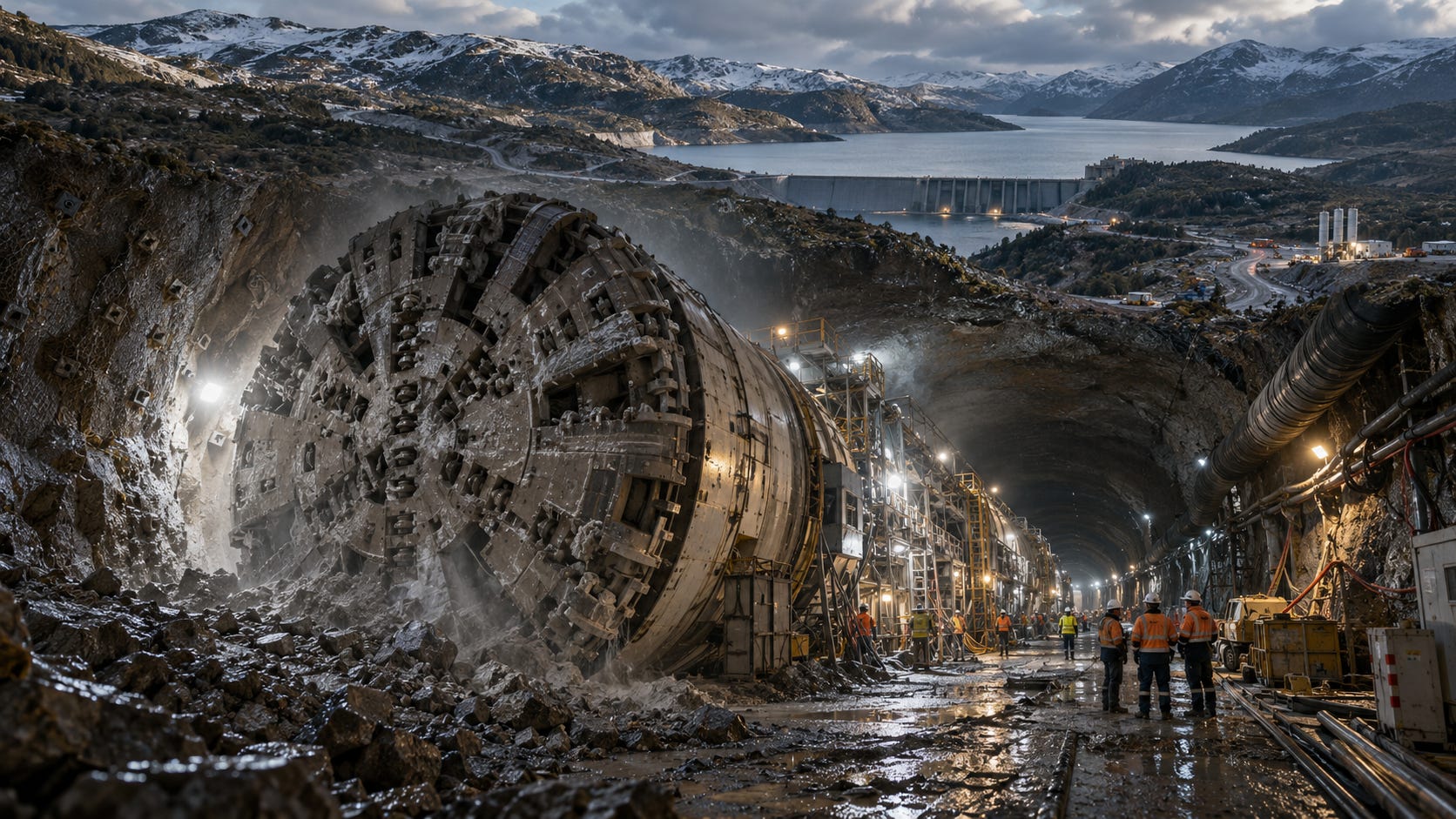
Deep beneath the Snowy Mountains, construction continues while the cost and accountability questions keep mounting.
⸻
Snowy Hydro has spent years revising the cost of its enormous electricity storage project, and Thursday night’s announcement suggests Australians still don’t know what the finished job will cost.
According to ABC News, the latest construction target is $22.2 billion, with $25 billion now a possibility. Chief executive Dennis Barnes hasn’t ruled out further increases.
Australians were introduced to a $2 billion proposal in 2017, although the approved budget had reached $6.1 billion by 2018. Another reset lifted it to $12 billion in 2023, with construction now expected to finish in 2029.
Snowy 2.0 has repeatedly exceeded its earlier estimates, yet the warnings and attempts to control costs stretch back years before this latest announcement.
I went looking through the project’s history and found some revealing material in a June 2026 report by Australia’s Auditor-General. The Australian National Audit Office (ANAO) examined how Snowy Hydro handled its 2023 contract reset and the problems that followed. Its findings raise questions about decisions made long before the latest increase.
Construction was already in serious trouble by 2023, with delays, poor productivity and disputed contractor claims. Snowy Hydro considered replacing Future Generation Joint Venture (FGJV), the consortium of Webuild, Clough and Lane responsible for the main construction work.
Unfortunately, replacing FGJV could have made an expensive problem worse. Snowy Hydro’s board was advised that essential equipment, including tunnel boring machines, belonged to the contractor and could be removed if the agreement ended.
Anyone following the project might remember Florence, the massive tunnel boring machine that spent much of 2023 stuck underground. Soft ground and a sinkhole had interrupted tunnelling, while later problems with hard rock caused further delays.
Snowy Hydro eventually renegotiated with FGJV rather than replace it. The Auditor-General found that decision was supported by largely sound planning and advice, although the new arrangements changed who carried much of the financial risk.
Previously, FGJV bore substantial responsibility for construction costs. Under the revised contract, some work became reimbursable, while other costs were shared against agreed targets.
My writing stays free. If you’d like to help keep it going, you can chip in here.
FGJV’s liability for certain overruns was capped, leaving Snowy Hydro responsible for further costs once that limit was reached. Getting construction moving again meant the Commonwealth-owned company accepted greater financial exposure.
Perhaps renegotiating was the better option, but taking on more risk surely demanded better financial controls.
Yet the Auditor-General found that Snowy Hydro lacked a reliable understanding of what the project would cost to finish. Snowy Hydro also had problems checking contractor payments, monitoring progress and encouraging better performance.
An external review examined FGJV’s subcontracting arrangements and found that required Snowy Hydro approvals could not be demonstrated for 79 agreements worth $228 million. That doesn’t mean the contracts were fraudulent, but it raises obvious questions about the company’s ability to enforce its own approval requirements.
Warnings were also reaching the board well before the latest announcement.
By March 2025, Snowy Hydro’s internal reporting described the risk of exceeding its cost target as extreme and almost certain. By July, the value of work completed was $834 million behind what had been planned for the money spent.
In September 2025, Snowy Hydro advised its shareholder ministers, Energy Minister Chris Bowen and Finance Minister Katy Gallagher, that the $12 billion budget would be exceeded. The company was also expecting to need further Commonwealth financial support.
A year later, the new construction target is $10.2 billion higher, an 85 per cent increase on the 2023 reset. And that still might not be the final figure.
How could a project supposedly reset to bring costs under control require another enormous increase so soon?
According to Snowy Hydro’s latest reassessment, only 44 per cent of the detailed construction design was complete in 2023, compared with 96 per cent now. Difficult geology, poor productivity and substantially higher labour requirements have also increased costs.
Barnes says around 5,000 people are now working on the project, considerably more than anticipated. Yet Australians still haven’t been given a complete breakdown showing how much each problem contributed to the additional $10.2 billion.
Another Auditor-General finding deserves attention because it concerns what Australians were being told.
Until May 2023, Snowy Hydro continued formally reporting the project as on track for cost and schedule, despite management separately identifying mounting difficulties. Snowy Hydro explained that its approved budget and timetable hadn’t formally changed.
Apparently, a project can remain officially on budget simply because the approved figure hasn’t changed, even when the evidence suggests the estimate is becoming unrealistic.
Responsibility extends beyond the construction site and the engineers dealing with difficult ground conditions.
Paul Broad led Snowy Hydro through the project’s early development, while Dennis Barnes took over in 2023. Former chairman David Knox oversaw the reset, and current chairman James Cain leads the board responsible for the project’s continuing delivery.
Successive governments also have questions to answer. The Coalition launched and approved the project, while Labor’s shareholder ministers approved the revised contract arrangements and later received warnings of further cost increases.
Energy Minister Chris Bowen and Finance Minister Katy Gallagher aren’t responsible for operating tunnel boring machines, but their shareholder responsibilities include oversight of the Commonwealth’s investment. Importantly, the Auditor-General examined Snowy Hydro’s management rather than the ministers’ decisions.
Snowy 2.0 may eventually provide valuable electricity storage, but its usefulness doesn’t automatically justify whatever construction ultimately costs. Nor does spending billions already establish that continuing is always the right choice.
Australians deserve to know what alternatives were considered at each major reset, why the estimates were accepted and what happened when those estimates began falling apart.
Successive management teams, boards and governments have had years of warnings, and the question now is whether anyone exercised enough judgement and authority to stop an increasingly expensive problem getting worse.
Should a parliamentary inquiry examine the decisions made by Snowy Hydro’s former and current directors, executives and shareholder ministers as costs continued to climb?