Marles Released a Defence Strategy. The Accounting Took Centre Stage.
The headline number landed. The scrutiny went straight to how it was built.

TL;DR
Richard Marles released the 2026 National Defence Strategy and Integrated Investment Program amid heightened expectations of a sharper, faster and more substantial lift in Australia’s defence posture.
Media questioning went straight at the 2.8 per cent of GDP claim, challenging what is being counted and whether the headline reflects real military lift or accounting changes.
Defence commentators then pushed further, arguing the strategy talks urgency and self-reliance, leans on the US alliance, and was delivered in a combative tone that dismissed critique rather than resolving it.
———
⸻
A defence strategy launch turned into an argument about accounting.
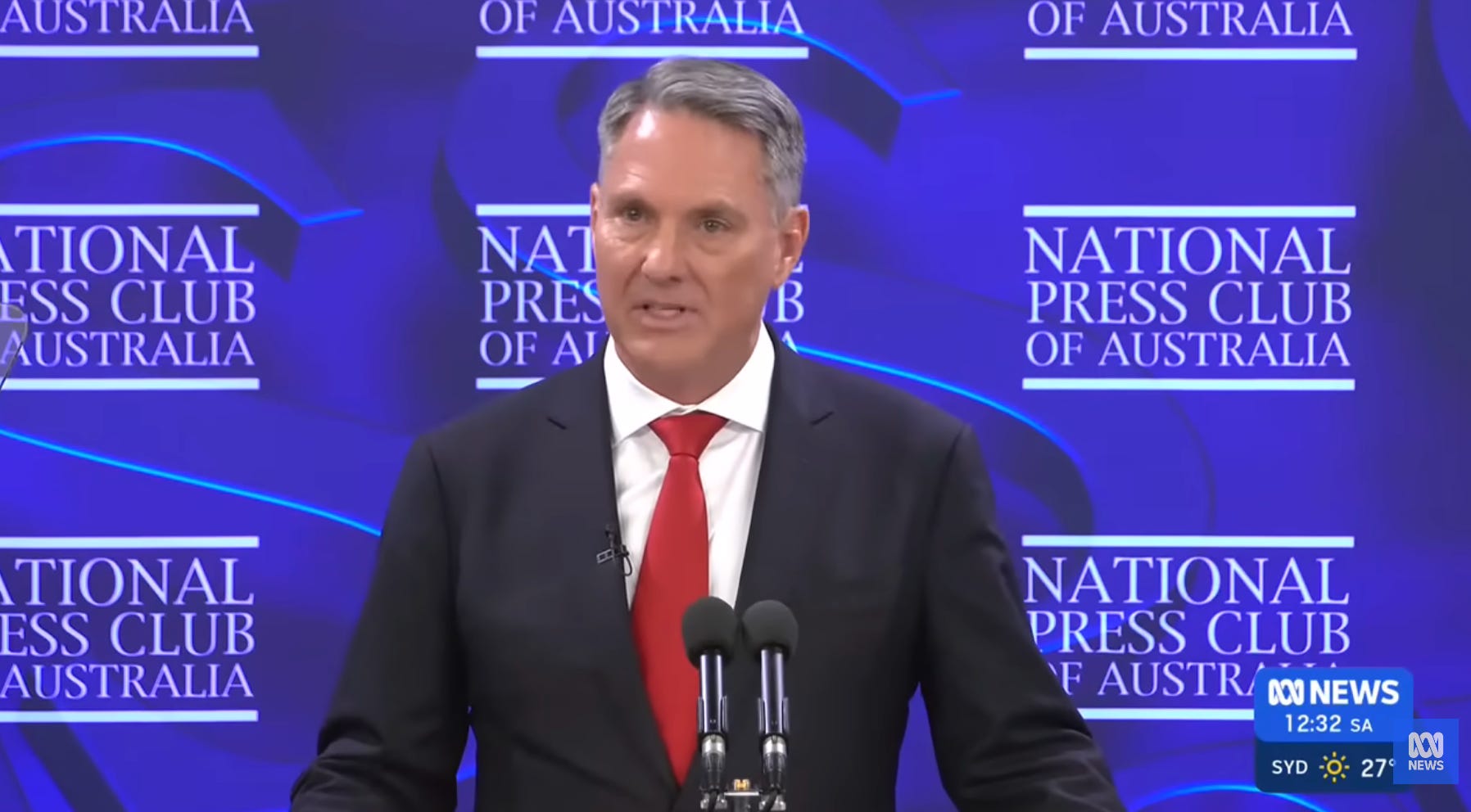
Australia’s Deputy Prime Minister and Defence Minister Richard Marles released the 2026 National Defence Strategy and Integrated Investment Program at the National Press Club as Albanese Labor’s answer to a more dangerous world. Defence spending, currently around 2 per cent of GDP, was framed as lifting toward 2.8 per cent as the centrepiece of the pitch.
Media questioning went straight at that figure. Journalists pressed what is being counted and whether the increase reflects real capability or accounting changes.
The strategy mattered. The accounting dominated.
For most people, 2.8 per cent of GDP means about $2.80 out of every $100 Australia earns is counted as defence spending. The Albanese Government is using a broader NATO-style definition, which lifts the number by including military pensions, national intelligence agencies and the Australian Federal Police, which sit outside the core war-fighting budget. The percentage goes up, but the equipment needed to fight does not arrive any faster.
The Q&A forced the shift.
Journalists drove the focus onto how the number was constructed and whether the lift was real or relabelled. Reporting followed that pressure rather than the prepared speech.
Capability still arrives at its own pace.
Commentary then moved from arithmetic to delivery. Analysts pointed to long timelines on submarines, missiles and force structure, alongside the admission that billions have been cut or reprioritised without a clear public list. A strategy sold as urgent still depends on timelines that are not.
Tone sharpened the reaction.
Richard Marles adopted a combative and highly partisan stance in defending “record spending” and pushing back on criticism. Dismissal of outside expertise and repeated emphasis on the headline number framed the exchange as argument rather than explanation. That approach may hold a political line, but it does not resolve the underlying questions.
Procurement reform deepened the doubt.
The proposed Defence Delivery Agency echoes earlier attempts to centralise acquisition under the old Defence Materiel Organisation model, which was later unwound after years of delay, cost overruns and frustration. Structural change promises speed, but history shows process often expands while delivery lags.
Civilian impact remained largely outside the frame.
Fuel security, supply chains and what disruption would mean in daily life were not clearly connected to the strategy, even as the threat environment was described in stark terms. A larger defence story still needs to show Australians where the pressure will land.
The strategy was released. The credibility test started immediately.
Watch the full address and Q&A: