Harley’s Problem Is That Everyone Got The Joke
Indian is not just attacking Harley’s bikes. It is exploiting the moment an outlaw brand became ordinary enough to mock.

NEED TO KNOW
Harley Davidson is not facing a simple motorcycle rivalry, but a challenge to the mystique that once made the badge feel dangerous, scarce and different.
Indian Motorcycle is using private equity pressure, insider knowledge and political style attack logic to turn Harley’s mass success into authenticity doubt.
Once a cult brand becomes common, riders, dealers and rivals all start asking whether the old signal still means anything.
———
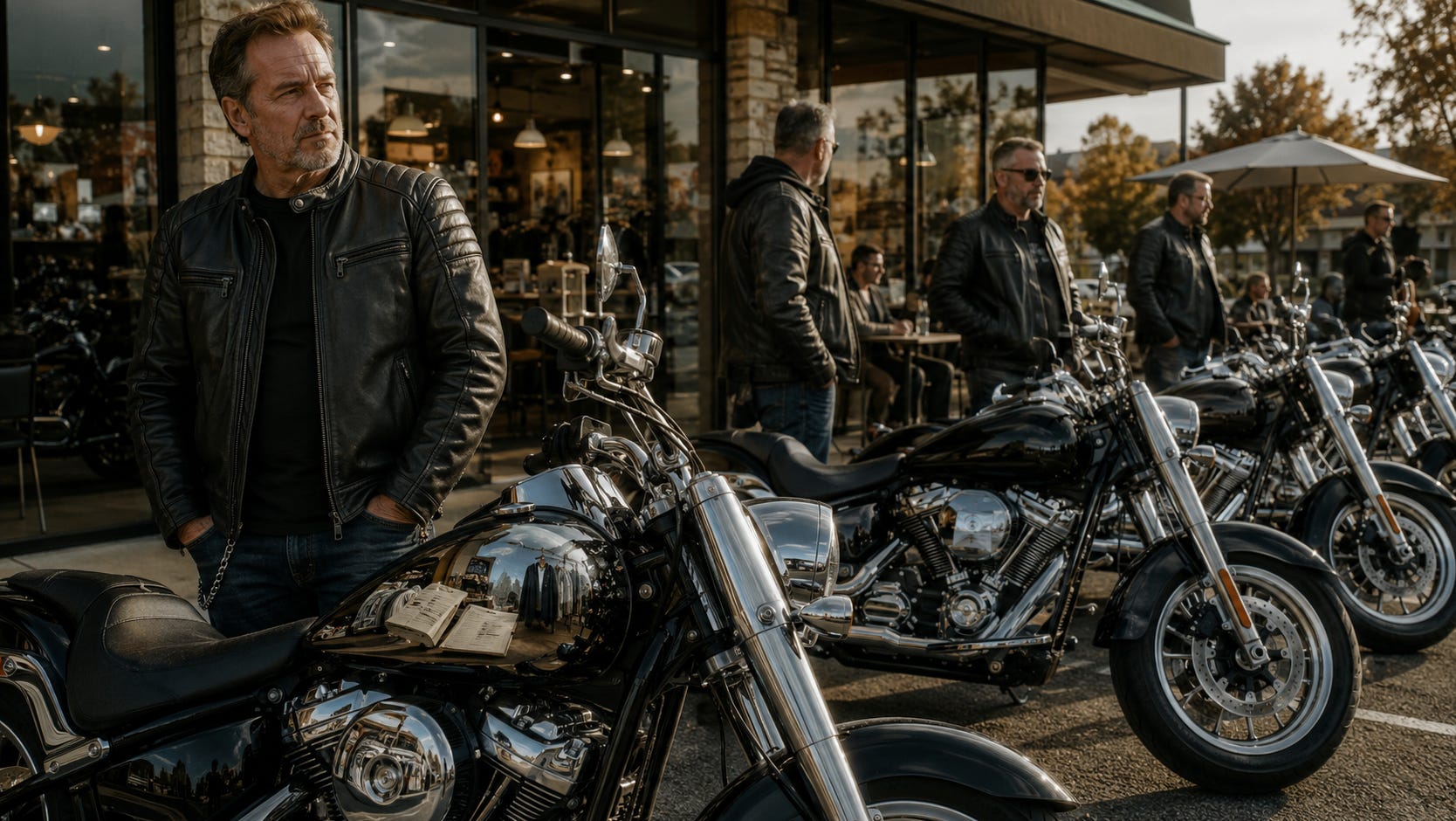
The outlaw badge became a weekend uniform.
⸻
Indian Motorcycle is not trying to beat Harley Davidson on chrome, it is trying to make Harley riders doubt the badge they already bought.
An AOL carried story about Harley dealers blasting Indian Motorcycle looks, at first glance, like another brand punch up between old rivals. Dealers are angry about an Indian ad mocking Harley’s new boss Artie Starrs as a pizza company bloke while hitting Harley on electric vehicles, Thailand production and diversity, equity and inclusion.
Riders can see and hear the pressure straight away. Loud ads, loyal dealers, angry forums, influencer chatter, and the old growl of people deciding who has sold out.
Harley’s deeper problem is not that too few people understand the badge, but that too many people do.
Polaris has sold a majority stake in Indian to Carolwood LP, making Indian a standalone business with new pressure to grow. Indian’s new chief executive, Mike Kennedy, spent 26 years at Harley before later moving through RumbleOn and Vance & Hines. RideApart has also reported links between Indian’s new private equity owners and political style media work, while Indian denied creating the broader influencer story, scripting the voices, or directing the attacks.
Political campaign logic has found the showroom because Harley’s mystique is now easier to question.
A normal bike ad says buy mine, not his. A political attack defines the opponent before he defines himself, gathers scattered grievances into one story, and forces the target to answer on hostile ground. Indian’s sharper play is to make Harley sound corporate, managed, global, soft, fake, or embarrassed by the very riders who made it famous.
Harley used to sell the feeling of not being like everyone else. Then everyone else bought one, financed one, accessorised one, parked one at the café, joined the ride, wore the shirt, and turned rebellion into a weekend package. A dealer is not just defending head office now; he is defending the local trust layer where myth becomes rides, parts, service, gossip, belonging, resale confidence and Saturday morning identity.
Indian is not creating Harley’s authenticity problem, it is exploiting the moment a cult brand became familiar enough to wound.
What do you reckon: has Harley lost its mystique, or is Indian just borrowing culture-war noise to sell bikes?