Even Fraud Has Become Performance Art
California’s bear costume insurance scam was funny on the surface, but it also showed how modern deception increasingly has to be staged, filmed and sold like a piece of content.

TL;DR
California’s bear suit insurance scam looked like a farce, but it captured something real about the age we live in. Modern fraud increasingly has to be staged, filmed, narrated and packaged like content so that institutions can process it as believable. The lie is no longer enough on its own. The scam now has to perform.
———
⸻
California’s bear suit insurance scam mattered because it showed how deception now has to look like a production.
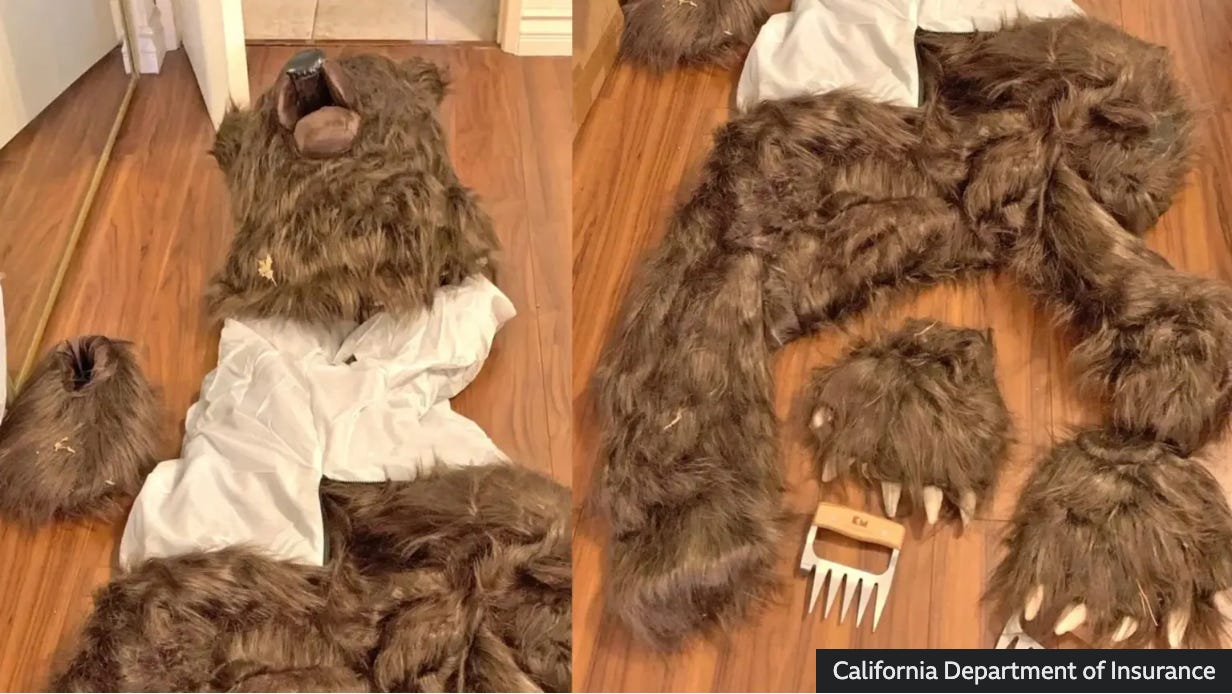
Adults were allegedly filmed crawling around luxury cars in a bear costume to fake damage claims. Rolls-Royces, Mercedes interiors, video footage and insurance paperwork turned the scam into something closer to a bad skit than a simple lie.
California investigators did not just get a false story. California investigators got props, visuals, a setting and a ready-made explanation designed to satisfy insurers and move money.
Fraud now comes with staging.
Institutions increasingly rely on footage, forms, claims processes and digital proof to sort truth from fiction. Scammers know that, so the job is no longer just to invent a story but to build a scene that can survive first contact with a system. Cameras do not simply record reality anymore. Cameras now help produce a version of reality for bureaucracies to consume.
Performance culture does not stop at social media.
Politics uses it, activism uses it, marketing uses it, and crime uses it too. Modern systems reward what looks legible, documented and emotionally plausible, which means the fraudster now behaves less like an old-fashioned liar and more like a content producer pitching a believable episode.
California’s bear suit was ridiculous, but the instinct behind it was entirely modern.