

Audio version narrated by an AI voice.
Need To Know
Veterans Minister Matt Keogh has committed $7.4 million to a new national peak body while its complete design report and draft constitution remain unpublished. An independent panel will select the inaugural directors before any elected Council of Members is in place. Smaller veterans’ organisations cannot properly assess their future influence without knowing who approves the founding rules or how members can change them.
———
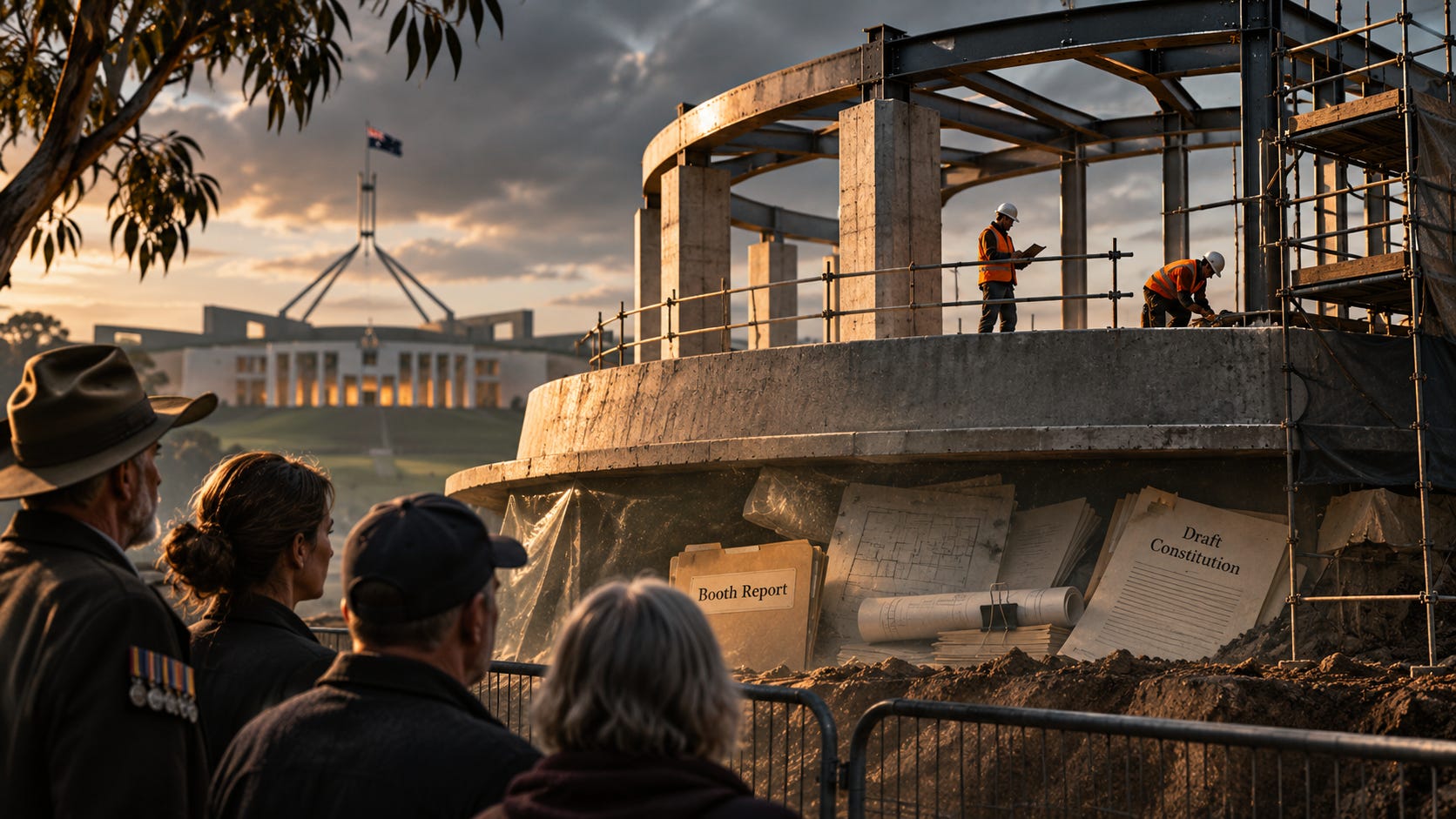
A veterans’ peak body built on foundations its members cannot inspect.
⸻
I’m not against a national veterans’ peak body; I’m against calling it sector-led before its own members can see who gets to write the rules.
On 3 November, Veterans Minister Matt Keogh announced $7.4 million over four years to get one established. Better cooperation between ex-service organisations makes sense, and a united voice in Canberra might even help the smaller groups usually crowded out.
Applications for its first chair and up to three directors close on 22 November, with an independent selection panel making the appointments. I went through the Department of Veterans’ Affairs (DVA) website and found a business-plan summary and confirmation that a draft constitution and operational plan exist, but not those documents or Nick Booth’s complete report.
A promise of a bigger voice means very little to a national veterans’ association if it cannot find out how its vote will count.
Booth finished his project on 14 August, then briefed the Ex-Service Organisations Round Table (ESORT) on the governance and funding recommendations on 23 September. DVA says the draft constitution will give the inaugural Board a starting point, and that Board will lead the organisation’s establishment before any elected Council of Members is operating. A briefing to established organisations is not the same as showing every prospective member what it is being asked to join.
My writing stays free. If you’d like to help keep it going, you can chip in here.
DVA says the selection panel is independent, but it has not publicly explained who appointed that panel or who gets the final say over the first constitution.
Here is what that means for a volunteer-run veterans’ group: can it vote against a national position, insist its objection be recorded, or challenge a Board decision made in its name? An organisation can keep lobbying government on its own, but a body presented as the sector’s collective voice may be heard first and loudest.
Royal Commission Recommendation 89 said membership, governance and funding arrangements should be agreed between DVA and the ex-service organisation sector, without funding rules shutting out eligible smaller organisations. Keogh points to consultation with more than 170 organisations and about 500 people, but consultation is not a vote and attendance is not agreement. Publish Booth’s full report and the draft constitution before applications close, identify who chose the selection panel, and explain when members will get to approve or change the rules.
Until Keogh can show who authorised the rules and who can change them, the claim that this national veterans’ body will be ‘sector-led’ is something we are expected to take on trust.
Has your veterans’ organisation been shown Booth’s report or the draft constitution, and has it been asked to agree to the proposed rules? Tell me in the comments.
Politics 101 for avoiding scrutiny: When in doubt, add another layer of management, complexity and obfuscation. Of and one more layer of CYA for Keogh