Australia Cannot Be Fuel Self-Sufficient
Part 1 of 8

TL;DR
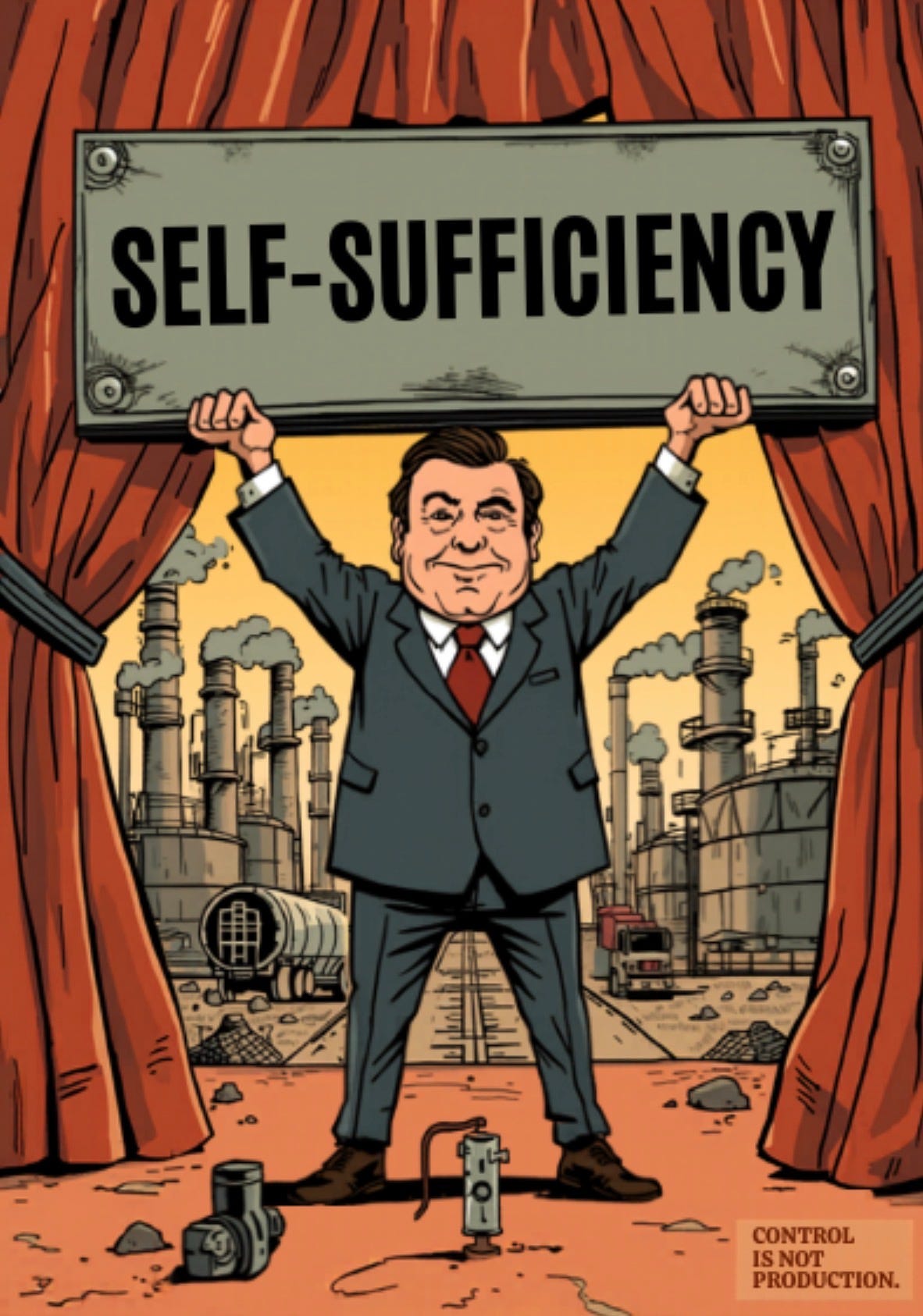
Australia cannot realistically become fuel self-sufficient, despite how often the claim is repeated. Domestic production does not deliver control over refining, storage, or distribution when the system is under pressure. The real test is whether fuel can keep moving when conditions tighten, because that is where failure occurs.
———
⸻
Australia cannot be fuel self-sufficient.
Australian fuel demand is too large for full independence to be credible. Imported refined fuel, limited conversion capacity, and exposure to global supply chains make that plain.
Political debate still treats self-sufficiency as if it were a practical destination. Serious policy should be asking how much resilience Australia can build instead.
Self-sufficiency is the wrong goal.
Domestic production is only one part of the chain that turns energy into usable fuel. Refining capacity determines what can be processed. Storage and distribution determine what can reach end users when pressure builds.
Resilience is the real measure.
A resilient fuel system holds enough supply, enough refining, enough storage, and enough transport capacity to keep essential sectors moving. Diesel, jet fuel, freight, agriculture, mining, emergency services, and defence all depend on that system holding together.
Australia needs a harder objective.
A credible national strategy would reduce dependence where it can and strengthen control where dependence remains. A credible national strategy would care less about rhetorical independence and more about whether the right fuel can reach the right place at the right time. Political comfort cannot be allowed to replace system reality.
Reality does not bend to rhetoric.
Next in the series:
Fuel Sovereignty Isn’t About Oil — It’s About Control