Appointments Aren’t the Problem. Trust Is.

TL;DR
Governments have always made high-profile appointments with a mix of merit, judgement, and politics.
The evidence does not support a clean “one side appoints women, the other does not” story.
The backlash now is less about gender and more about collapsing trust in how decisions are made.
———
⸻
This debate is not about who gets appointed.
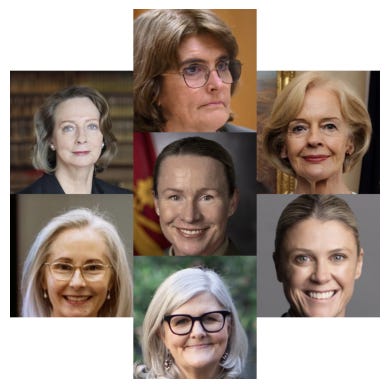
Recent decisions to install a new RBA Governor, Governor-General, AFP Commissioner and Chief of Army have triggered a predictable reaction. Overdue on one side. Box-ticking on the other.
A run of decisions creates the impression of a pattern. The appointment of a new Governor-General turned that impression into an argument about judgement and neutrality. The appointment of a new Chief of Army has now widened it further.
Both miss the point.
Every government uses senior roles to signal direction.
Stability, reform, competence, the signal shifts but the behaviour does not. That is not new. Public trust has shifted.
Lower trust means every decision is questioned for motive.
The record is more complicated than the noise suggests. Coalition governments appointed Susan Kiefel as the first female High Court Chief Justice and Rachel Noble to run a major intelligence agency. Labor governments appointed Quentin Bryce and Sam Mostyn as Governors-General in similarly historic terms.
That is not a pattern.
That is a cluster. Clusters invite narrative. Narratives quickly become assumptions.
Messaging sits at the centre of the problem.
“Historic first” is intended as recognition. “Historic first” is often received as justification.
That gap matters. Public explanations that lead with symbolism and arrive late to substance only deepen suspicion.
Most of these selections rest on deep experience and long service.
Public confidence now depends not only on who is chosen, but on how the choice is explained. In a low-trust environment, order matters.
Trusted experience to government looks like jobs for mates to critics. The same shortlist can signal competence or insider preference. Perception shifts faster than evidence.
That tension has always existed.
Social media accelerates the problem. Labels replace analysis. “DEI hire” competes with “milestone appointment.”
Neither explains the decision.
The only test that matters is simple.
Who was the best person available at the time? Failure to identify a stronger alternative weakens criticism. Failure to clearly justify the selection strengthens suspicion.
Both failures now occur in the same debate.
That is the uncomfortable truth.
Critics who cry “DEI hire” without evidence are not defending merit. They are signalling distrust.
Governments that lean on symbolism without clearly proving merit are not strengthening confidence. They are feeding that distrust.
Both sides think they are defending standards.
Both sides are eroding them.
Appointments have not changed.
Trust has.