

Audio version narrated by an AI voice.
Need To Know
Thirty-five public submissions have put veterans’ access to healthcare under parliamentary scrutiny. Finding an appropriate practitioner, obtaining travel funding and renewing treatment approvals can involve separate decisions that affect whether care is received. Senators now have an opportunity to examine those decisions, compare the evidence and seek answers from the Department of Veterans’ Affairs.
———
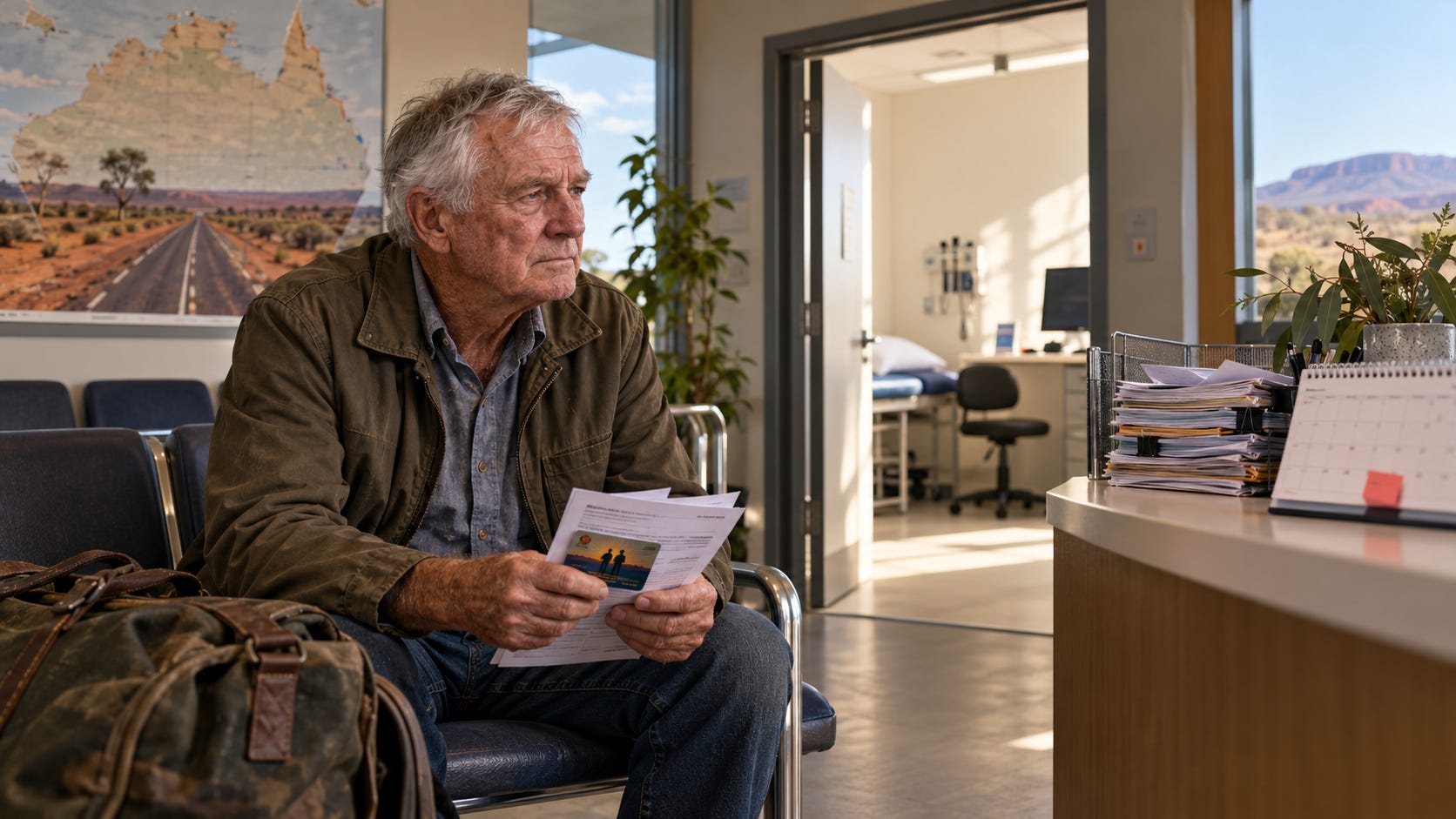
A Veteran Card may promise healthcare, but getting the treatment can be another matter entirely.
⸻
For the Department of Veterans’ Affairs (DVA), processing a healthcare provider’s invoice promptly says nothing about whether another veteran could obtain an appointment.
Albanese Labor’s September withdrawal of its proposed $5,000 allied health threshold was welcome news. Yet the Senate inquiry into veterans’ healthcare was never only about a proposed dollar figure.
I’ve always expressed Australia’s Repatriation obligation in simple terms: “If you send them, and you bend them, you mend them!” When government accepts responsibility for an illness or injury caused by service, clinically necessary treatment ought to follow that responsibility, not an arbitrary Budget limit.
DVA can approve a veteran’s entitlement without ensuring the veteran can find someone willing and able to provide the treatment.
Here’s what happens beneath the promise. DVA sets payment conditions and makes certain funding decisions, but independent practitioners decide whether to accept DVA patients. Referrals, travel assistance and renewed funding can each determine whether an appointment happens.
A veteran can satisfy every eligibility requirement and still be unable to get through the consulting-room door.
DVA’s own submission reports that more than 99 per cent of electronically received requests for payment from healthcare providers were processed within applicable targets, generally two business days. Fast payment helps practitioners, but doesn’t tell us how long somebody waited for prior approval or how many appointments never happened.
I’m examining 35 public submissions to the Senate Foreign Affairs, Defence and Trade References Committee’s inquiry into DVA-funded healthcare. Individual Australians have contributed alongside medical organisations, ex-service groups, family representatives and DVA itself.
Senators can now compare individual accounts with DVA’s explanation of how the same system works.
I’m beginning a three-part series with those submissions, examining where contributors agree, where they differ and what remains unanswered. Friday’s hearing on 30 October offers senators another opportunity to question witnesses, although submissions themselves are not proven findings.
My writing stays free. If you’d like to help keep it going, you can chip in here.
Start with something most people take for granted: finding a doctor. The Australian Medical Association says inadequate fees deter some doctors from accepting DVA patients, while Allied Health Professions Australia points to unpaid reporting and other costs.
Higher fees for many allied health practitioners are planned for July 2027, but a higher payment cannot produce an appointment where no suitable clinician is available.
Even finding the right practitioner doesn’t necessarily get the veteran into treatment. DVA assesses travel assistance separately, generally using the closest place where appropriate care is available, not automatically the existing clinician’s location.
Avoiding unnecessary travel costs is sensible. But before restricting a travel warrant, has DVA established that a nearer clinician offers clinically equivalent or better care, accepts DVA patients, has timely appointments and can safely take over ongoing treatment?
Women Veterans Network Australia and the Australian Peacekeeper and Peacemaker Veterans’ Association argue that clinical suitability and continuity shouldn’t be sacrificed to geography. The Australian Orthotic Prosthetic Association raises related concerns about specialist expertise and equipment in its own field.
Renewing established care can produce another delay. A clinician recommends continuing treatment, but DVA hasn’t decided the renewal before existing approval expires, leaving the practitioner uncertain about payment and the veteran uncertain about the next appointment.
Nothing about an unfinished administrative decision establishes that treatment is no longer clinically needed. Yet the veteran may be left without an appointment, and the practitioner without certainty of payment.
May’s Federal Budget proposed another change: replacing the 12-session allied health treatment cycle, with its repeated GP referrals and reports, with a $5,000 annual review threshold. Further clinically necessary allied health care could still be funded following review, with certain groups exempt from the threshold; it wasn’t a limit on all healthcare.
September’s withdrawal kept the planned allied health fee increases but gave no equally clear assurance about removing the cycle. Existing treatment arrangements remain, with further cycles allowed when necessary.
Medical organisations disagree about the best approach. The Australian Medical Association values GP oversight, while Allied Health Professions Australia questions paperwork tied to a fixed session count; clinical review matters, but reaching the twelfth appointment doesn’t necessarily mean someone’s needs have changed.
So what happens to these 35 submissions? Senators can question invited contributors at public hearings, with their public evidence recorded in Hansard and available for later examination.
Senators can draw on that evidence during Senate Estimates, debates and Question Time, seeking figures rather than accepting competing assertions. Written answers can also be compared with earlier statements and subsequent government decisions.
Senators also have a deadline. The committee is required to report its findings and recommendations to the Senate by 10 November 2026, giving the Government a set of conclusions and proposed reforms it will need to consider.
For example, DVA could be asked how many complete renewals were undecided when funding expired and what checks support decisions that suitable treatment is available closer to home. Answers would make those issues easier for anyone to examine.
I favour a minimum safeguard while timely renewals are undecided: temporary continuation of established, clinically necessary treatment, unless documented clinical, safety or substantiated integrity concerns justify interruption. Such protection wouldn’t authorise new treatment, guarantee permanent funding or solve provider shortages.
In the next two articles I’ll examine how veterans find, reach and keep appropriate care, then what became of the proposed changes to allied health referrals and reports. Friday’s hearing may provide answers to a question worth asking: can DVA show that its arrangements deliver care, rather than just process paperwork?
What would you most like senators to ask DVA about whether veterans can actually receive the healthcare they’re entitled to? I’d be interested in your view.
I have a back injury; no amount of treatment will 'fix' it. The allied health treatment I receive stops it from worsening, prevents other associated problems arising, and enables me to function. There is no magical number that enables anything with this injury for it to improve, it is all about preventative maintenance, not repair. any regime that ignores that is simply bureaucratic not clinical.
Been seeing a chiro for accepted conditions for fifteen years, never once claimed for travel. Moved house several years ago, now further away, but still see him for continuity of treatment despite there being closer practitioners. We seem to lose sight of the importance of practitioner/patient relationship in the provision of treatment for chronic conditions.