

Audio version narrated by an AI voice.
Need To Know
A DVA card establishes what treatment the Commonwealth will fund, but it cannot make a doctor, psychologist, physio or other provider accept the work. Albanese Labor is lifting allied-health fees from July 2027 after providers raised concerns about existing fee arrangements, while DVA itself has been cutting some approval requirements to reduce provider paperwork. Following the old Repatriation promise now means finding out why providers stop taking DVA, where access is thinning and whether more money is enough to bring them back.
———
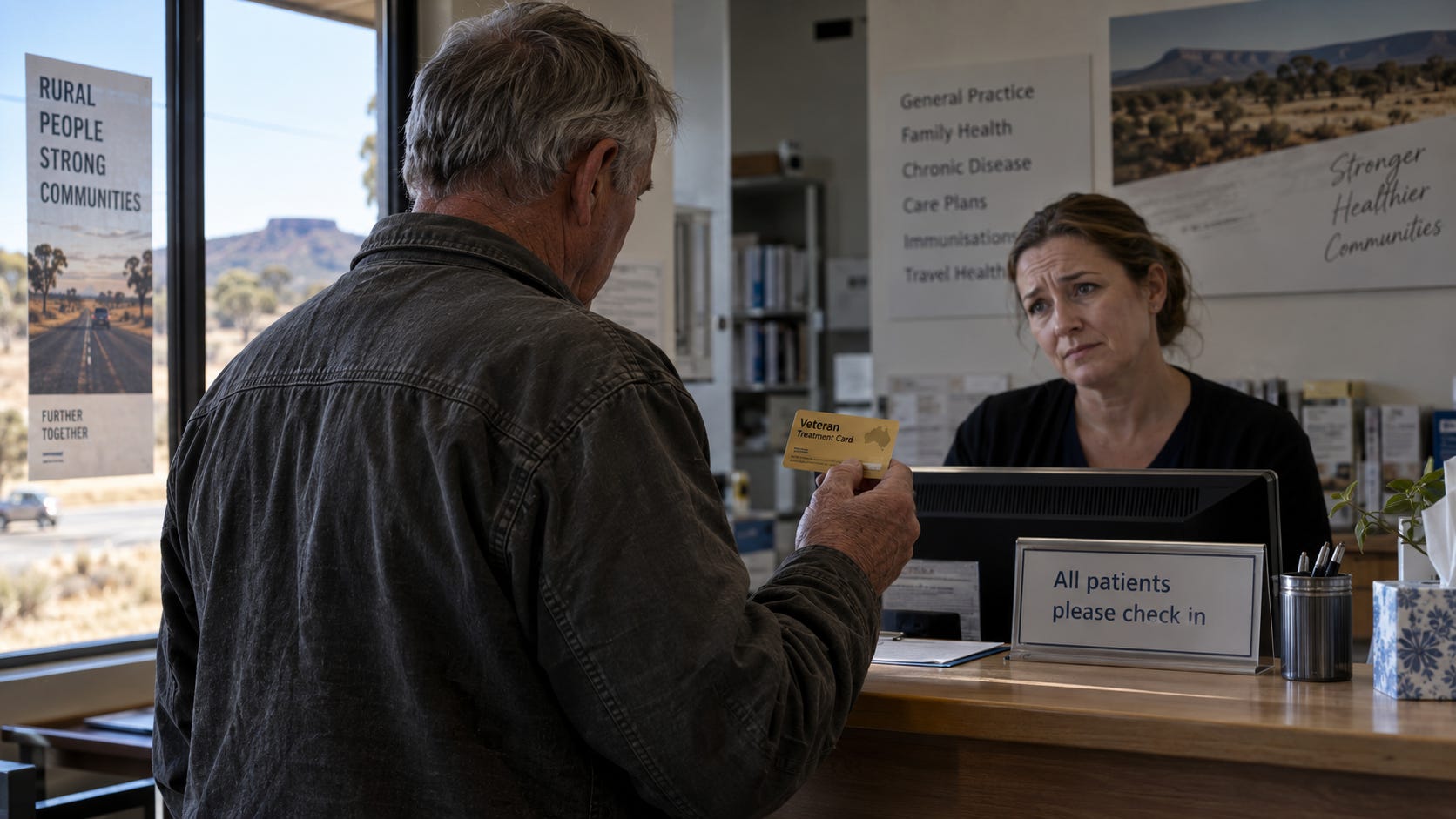
A Gold Card can promise the care, but it cannot make a provider say yes.
⸻
A Department of Veterans’ Affairs (DVA) Gold Card may cover clinically required treatment for all medical conditions within Australia, but the card cannot make the person at the other end of the phone accept DVA.
DVA also issues a White Card for specific conditions, including accepted service-related conditions and some other eligible treatment. Yesterday I wrote about what happened when the Commonwealth gave up direct control of its Repatriation General Hospitals and said my next step was to open those deals properly, because recording the surrender of an institution is easier than tracking the promise attached to it.
Following that promise forward brings us here, because much of the old Repatriation promise now depends on outside providers deciding that dealing with DVA is worth their while. DVA can define the entitlement, publish the fee schedules and set the rules, but the provider still gets to decide whether to take the patient.
A Veteran Card can be completely valid while the veteran still hears four words that make the entitlement feel pretty hollow: “We don’t take DVA.”
DVA’s own rules help explain why the provider’s decision matters. A provider who accepts the card agrees to the DVA payment arrangements and cannot charge the veteran a gap fee, while some services still need prior approval before DVA will pay. DVA has already removed approval requirements from some treatments specifically to reduce administrative burden for providers, which rather gives the game away: price matters, but so do forms, approvals, claims and the time spent dealing with the system.
Albanese Labor is now changing the price side of that bargain, with $169.7 million over five years and $58.8 million a year ongoing to increase allied-health fees from 1 July 2027.
DVA says the increase responds to provider feedback about the challenges of delivering care under existing fee arrangements, and after the Government abandoned the proposed $5,000 allied-health threshold it confirmed that the fee increase will still proceed. Better fees may persuade some providers to stay, return or open their books, but money is only one part of the provider’s calculation. A practice can still look at the DVA rate, the billing rules, the approvals and the administration, then decide the same appointment is easier to fill with somebody else.
Distance turns that administrative problem into a very practical one because a veteran in a major city may be able to ring the next practice, while a veteran in a regional town may find the next suitable provider is an hour or two down the road. DVA has told GPs and other health providers that, where clinically appropriate, they can consider referral to a closer service to reduce travel, and eligible veterans may also use Booked Car with Driver. “Closer” only solves the problem if that provider actually accepts DVA, has room, offers the treatment needed and is clinically suitable, because a name nearer on the map is not much use when the answer on the phone is still no.
Repatriation reform now has to follow the promise all the way to the treatment room by finding out where providers are walking away, why they are doing it, whether higher fees change their minds, and whether DVA and the Repatriation Commission can see those gaps before veterans discover them one rejected appointment at a time.
If Repatriation reform matters to you, add your count to Veterans Count. Tell us your connection to Navy, Army or Air Force, past or present, whether through service, family, caring, support, clinical work or another connection, and which issues need attention. Then send Veterans Count to five people. One veteran is easy to ignore. An electorate is not.
My writing stays free. If you’d like to help keep it going, you can support it here.